Softball Defensive Situations: A Comprehensive Guide
Navigating softball defense requires understanding various scenarios. Practice plans should focus on repetitions, utilizing stations for fielding and hitting drills.
Prioritize basic concepts like force outs, adapting to age and skill levels.
Understanding Common Defensive Formations
Effective softball defense begins with a solid grasp of common formations. The standard setup involves players positioned at each infield base – first, second, third, and shortstop – alongside a pitcher and catcher. Outfielders typically occupy left, center, and right field. However, formations dynamically shift based on the game situation.
A crucial adjustment is the “in” or “shifted” infield, employed to counter strong pull hitters. This involves moving infielders closer to home plate and potentially shifting them towards the pull side. Conversely, an “outfield shift” repositions outfielders based on a batter’s tendencies. Recognizing these adjustments is key.
Defensive alignments also depend on runner placement. With a runner on first, infielders may play slightly deeper to guard against stolen base attempts. Understanding these nuances, and practicing transitions between formations, is vital for a cohesive defense. Repetitive drills, focusing on quick adjustments and communication, are essential for success. Coaches should emphasize situational awareness and adaptability within these formations.
The Infield Fly Rule Explained
The Infield Fly Rule, often a source of confusion, is designed to prevent defensive trickery. It’s invoked when runners occupy first and second, or first, second, and third, with less than two outs. If a fair fly ball can be caught by an infielder with ordinary effort, the batter is automatically out.
The umpire will declare “Infield Fly, batter is out!” to signal the rule’s application. This prevents the defense from intentionally dropping the ball to create a force out at multiple bases. It’s crucial to note the “ordinary effort” component; a difficult catch doesn’t trigger the rule.
The rule’s purpose is to maintain fairness and prevent the defense from exploiting the situation. It’s particularly important in youth softball, where understanding the rule can be challenging. Coaches should dedicate practice time to explaining and demonstrating the infield fly rule, ensuring players grasp its intent and application. Misunderstanding can lead to frustration and incorrect play.

Double Play Scenarios: Force Outs & Tag Plays
Executing double plays is a cornerstone of strong softball defense. Force outs occur when a runner must advance to the next base due to the batter becoming a runner. Proper footwork and accurate throws are vital for turning these plays efficiently. The infielders need to quickly react to the batted ball and establish a clear throwing lane.
Tag plays, conversely, require a fielder to physically tag a runner with the ball while the runner is not safely on a base. These demand quick reflexes and decisive action. Communication is key – fielders must clearly call for the ball and indicate their intended target.
Drills focusing on quick transfers, accurate throws to specific bases, and understanding runner positioning are essential. Scrimmages should incorporate double play situations to build game-like instincts. Repetition is crucial, especially for younger players, to develop muscle memory and confidence in executing these critical defensive maneuvers. A well-executed double play can quickly shift momentum.
Covering First Base: Proper Technique & Responsibilities
The first baseman’s role is pivotal, demanding both reactive quickness and consistent technique. Responsibilities extend beyond simply catching throws; it includes stretching for wide throws, maintaining a balanced fielding position, and effectively covering first base on various plays.
Proper footwork is paramount. A split-step anticipating the throw allows for quicker reaction time. The glove should be extended towards the throwing lane, creating a large target. When stretching, the foot pivots, maintaining balance while reaching for the bag.
Understanding situational awareness is crucial. Knowing when to hold the bag versus reaching for a throw, and anticipating potential pickoff attempts, are key skills. Drills should focus on receiving throws from different angles, stretching drills, and reacting to batted balls hit directly to the first baseman.
Communication with the pitcher and other infielders is also vital for successful play execution. Consistent practice builds confidence and reliability at this critical defensive position.
Covering Second Base: Pivoting & Transferring the Ball
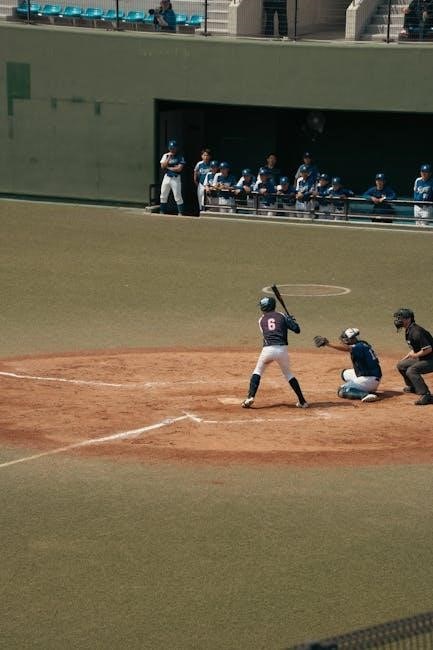
Effective coverage of second base hinges on swift footwork, precise pivoting, and a clean, quick transfer of the ball. This position demands agility for fielding ground balls, turning double plays, and covering the bag on force-out attempts. Mastering these skills is essential for a strong infield defense.
The pivot foot is critical for initiating the throw to first. A proper pivot allows for momentum transfer and accuracy. Drills should emphasize quick, controlled pivots in both directions. The transfer from glove to throwing hand must be seamless, minimizing wasted motion.
Footwork drills focusing on lateral movement and quick reactions to ground balls are vital. Practicing double play feeds – receiving the ball, pivoting, and throwing to first – builds muscle memory and timing.
Communication with the shortstop and first baseman is paramount, especially during double play situations. Consistent repetition and focused practice will refine technique and enhance defensive efficiency at second base.
Covering Third Base: Hot Corner Strategies
The “hot corner” demands exceptional reflexes, a strong arm, and quick decision-making. Third basemen face hard-hit balls and must react instantly to bunt attempts and aggressive base runners. Strategic positioning and anticipation are key to success.
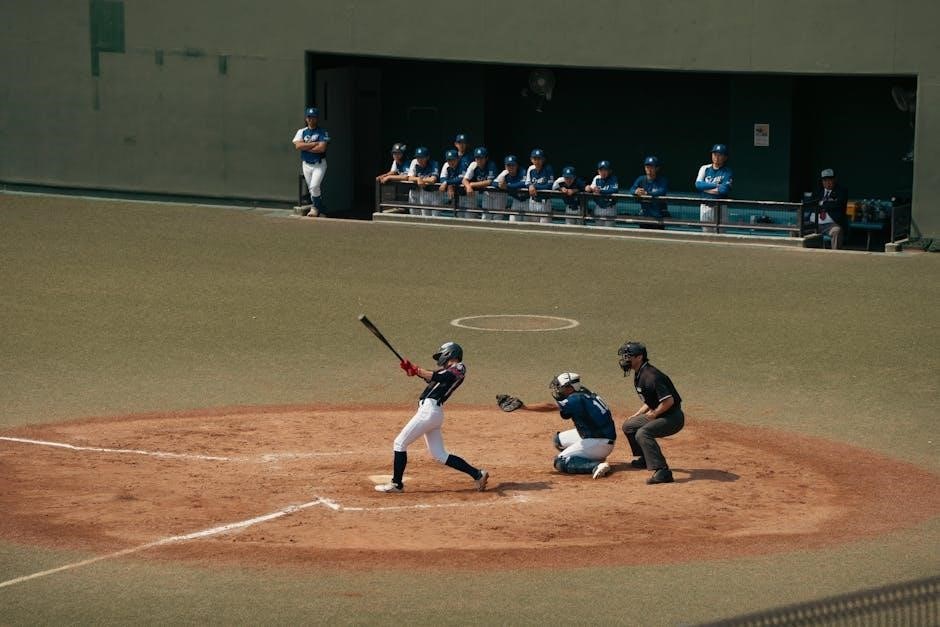
Reacting to ground balls requires charging aggressively, fielding cleanly, and making a quick throw to first. Slow rollers necessitate a rapid exchange and accurate throw. Drills should focus on these scenarios, emphasizing footwork and glove work.
Third basemen must be prepared for line drives and pop-ups, reacting quickly to secure the out. Communication with the shortstop is crucial for covering the hole between them.
When a runner is on first, the third baseman must be alert for the bunt and run play. A quick reaction and accurate throw to home or first can prevent runs. Consistent practice and focused attention are vital for mastering the hot corner.
Shortstop Range & Quickness Drills
The shortstop position demands exceptional range, agility, and a swift transfer. Drills should prioritize lateral movement, quick feet, and efficient fielding techniques. Developing these skills is crucial for covering ground and making accurate throws.
Lateral shuffle drills enhance side-to-side movement, enabling the shortstop to cover more ground. Cone drills improve agility and quickness, simulating game-like scenarios. Focus on maintaining a low center of gravity and quick footwork.
Ground ball drills emphasize fielding cleanly, transferring the ball quickly, and making accurate throws to first or second base. Repetition is key to building muscle memory and improving reaction time.
Pop-up drills develop tracking skills and the ability to position oneself under the ball. Communication with the outfield is essential to avoid collisions. Consistent practice and focused attention are vital for mastering the shortstop position and maximizing defensive efficiency.
Second Base Double Play Footwork
Mastering the double play at second base hinges on precise footwork, a smooth transfer, and accurate throws. Drills should emphasize quick reactions, efficient movement, and seamless coordination between the second baseman and first baseman.
The “feed and pivot” drill is fundamental. The second baseman fields the ground ball, quickly secures the ball, and pivots towards first base, maintaining a balanced stance. Proper footwork ensures a clean transfer and a powerful throw.
“Around the horn” drills simulate game-like double play situations, involving the shortstop, second baseman, and first baseman. This drill enhances communication, timing, and the ability to execute the play under pressure.
Focus on a quick first step, a controlled shuffle towards the ball, and a decisive pivot. Repetition builds muscle memory and improves reaction time. Consistent practice and attention to detail are crucial for turning game-changing double plays and bolstering the team’s defense.
First Baseman Footwork & Stretching for Throws
A first baseman’s footwork is critical for fielding ground balls, stretching for throws, and securing outs. Proper positioning and agile movements are essential for covering the first base line effectively.
Footwork drills should focus on quick lateral movements, ensuring the first baseman can react swiftly to batted balls and maintain a balanced stance. “Shuffle” steps and “cross-over” steps are vital for covering ground efficiently.
Stretching for throws requires extending the glove towards the pitcher or other infielders while maintaining a stable base. The footwork should involve a slight lean and a controlled reach, avoiding overextension.
Regular stretching exercises improve flexibility and range of motion, reducing the risk of injury and enhancing the ability to make accurate throws. Drills incorporating quick reactions and stretching for throws simulate game-like scenarios, building confidence and improving performance. Consistent practice is key to mastering these fundamental skills.
Outfield Positioning: Reading the Batter & Ball Flight
Effective outfield positioning is paramount for preventing hits and making crucial plays. It begins with understanding the batter’s tendencies and anticipating where the ball might be hit.
Outfielders should analyze the batter’s stance, swing path, and previous at-bats to predict the likely direction of the hit. A right-handed pull hitter, for example, suggests shifting slightly towards left field.
Reading ball flight is equally important. Outfielders must quickly assess the ball’s trajectory, speed, and spin to determine the best route to take. This requires focused attention and quick decision-making.
Communication is vital; calling for the fly ball ensures no confusion and prevents collisions. Drills focusing on tracking fly balls, simulating different hit angles, and practicing communication enhance outfielders’ skills. Consistent practice builds confidence and improves reaction time, leading to more successful plays and a stronger defensive unit.
Outfield Communication: Calling for Fly Balls
Clear and decisive communication is absolutely critical in the outfield, especially when tracking fly balls. A lack of communication can lead to collisions, dropped catches, and ultimately, runs scored against your team.
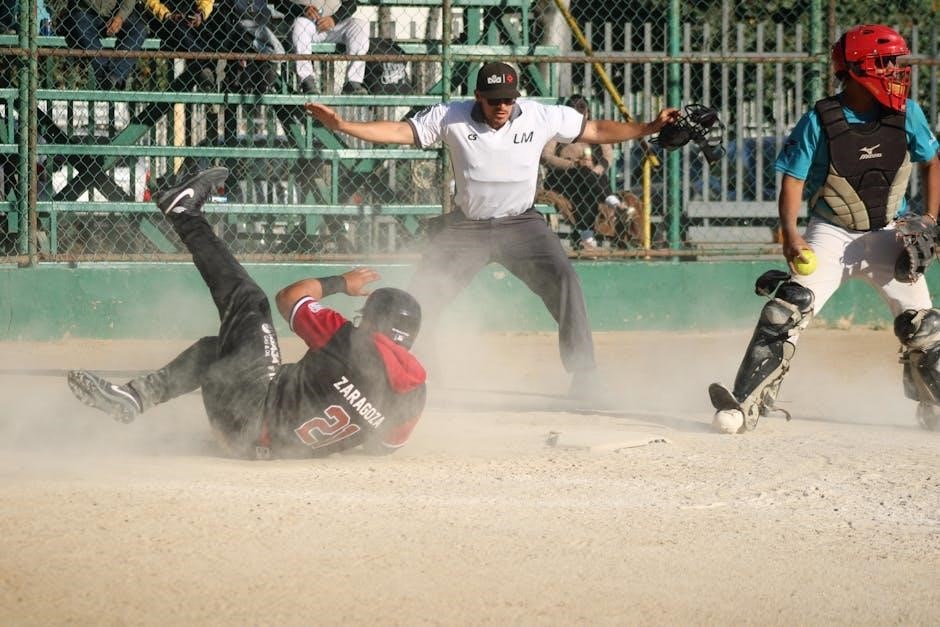
The primary responsibility for calling a fly ball lies with the outfielder who has the clearest path and best opportunity to make the catch. A loud, confident “I got it!” signals ownership of the play to teammates.
If an outfielder is unsure or another outfielder has a better read, they should yield immediately. Hesitation can create confusion and increase the risk of a dropped ball. Consistent verbal cues are essential.
Drills should emphasize loud, clear calls and quick reactions. Simulate game-like scenarios where outfielders must communicate under pressure. Reinforce the importance of prioritizing safety and teamwork. Effective communication transforms a potentially chaotic situation into a smooth, coordinated play, bolstering the entire defense.

Backing Up Plays: Preventing the Big Inning
Preventing a single error from escalating into a big inning hinges on diligent backing up. This isn’t merely a secondary thought; it’s a fundamental defensive principle. Every player must understand their responsibilities in supporting teammates.
When a teammate is charging a ground ball, the adjacent infielder should move to cover the base they’re vacating. Similarly, when an outfielder throws to a base, the closest infielder backs up the throw in case it’s wild or mishandled.
Backing up also extends to passed balls or wild pitches. The catcher should immediately attempt to retrieve the ball, while the first and third basemen move to back up home plate. Constant awareness and anticipation are key.
Practice drills should incorporate scenarios requiring quick reactions and seamless transitions to backup positions. Emphasize the importance of vocal communication – calling out “I’m backing up!” – to avoid confusion. A strong backup system minimizes the impact of errors and keeps the opposing team from capitalizing on mistakes.
Dealing with Runners on First & Second
Managing runners on first and second presents a complex defensive challenge, demanding heightened awareness and strategic positioning. The primary concern is preventing a stolen base or a hit-and-run play, while also preparing for potential scoring opportunities.
The shortstop and second baseman must maintain a tight, athletic stance, anticipating the steal. Quick footwork and accurate throws to the respective bases are crucial. The pitcher needs to vary their delivery and utilize pickoff moves to keep runners honest.
The first baseman must be ready for a potential force out at third, while the third baseman anticipates a ground ball that could lead to a double play. Communication is paramount – calling out “runner!” or “pickoff!” ensures everyone is on the same page.
Drills should focus on quick reactions to stolen base attempts and executing double play turns efficiently. Situational awareness and anticipating the batter’s tendencies are vital for minimizing scoring chances and controlling the inning.
The Delayed Steal: Defensive Strategies
A delayed steal requires exceptional defensive focus, as runners aren’t immediately breaking for the next base. This tactic aims to capitalize on the pitcher’s commitment to the batter, creating a scoring opportunity. Defenders must remain patient and avoid premature movements.
The key is recognizing the runner’s secondary lead – a larger-than-usual step towards the next base. This signals the potential steal. The catcher needs to hold the ball, preventing a quick throw and allowing time to assess the situation. Pitchers should also hold their follow-through.
The infielders must be prepared to react quickly to the steal attempt, covering bases and executing accurate throws. Communication is vital; the catcher should clearly signal the delayed steal to the infield. Avoiding a rundown is crucial – a direct throw to the target base is preferred.
Practice drills should emphasize recognizing the secondary lead and reacting with controlled aggression. Defenders must maintain composure and execute their roles precisely to thwart the delayed steal and prevent runs.
First and Third Situations: Pickoff Moves & Plays
Having runners on first and third presents a high-pressure defensive scenario, demanding precise execution. The primary concern is preventing a double steal, where both runners advance, likely scoring from third. Effective pickoff moves become crucial, but must be timed strategically.
The pitcher’s pickoff to first should be deceptive, varying timing and looking the runner back. However, excessive pickoff attempts can be predictable. The catcher plays a vital role, utilizing quick throws to second to deter the steal attempt and potentially catch the runner leaning.
Defenders must be alert to potential squeeze plays – a bunt attempt with the runner on third breaking for home. The pitcher needs to charge the plate, while the first and third basemen aggressively pursue the bunt. Communication between these players is paramount.

Drills should focus on quick reactions to the bunt, accurate throws, and coordinated coverage of home plate. Recognizing the batter’s tendencies and anticipating the squeeze play are key defensive strategies in this challenging situation.
Runners on Second and Third: Scoring Prevention
With runners occupying second and third base, the defense faces an immediate scoring threat. Preventing runs becomes the absolute priority, requiring heightened awareness and disciplined play. Every pitch must be treated as a potential scoring opportunity, demanding focused execution from every fielder.
The infield must be prepared for ground balls, prioritizing quick reactions and accurate throws to home plate or first base. A slow roller can become a game-changing play. Outfielders need to anticipate potential fly balls, positioning themselves for quick routes and strong throws.
The pitcher’s control is paramount, avoiding walks or wild pitches that could easily score a run. Varying pitch selection and location keeps the hitters off balance. The catcher must frame pitches effectively and make quick, accurate throws to second base to disrupt any steal attempts.
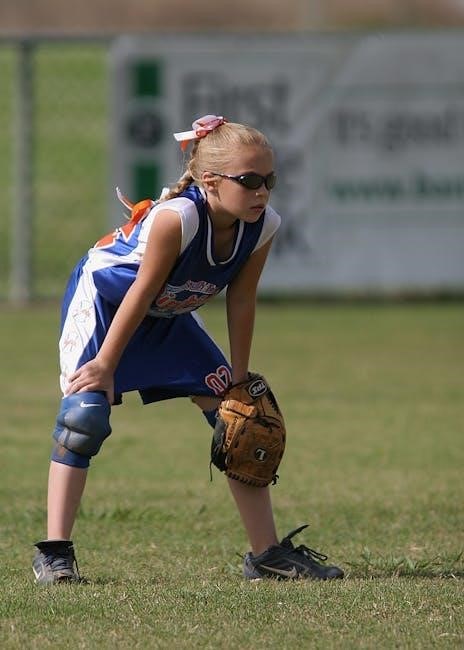
Defensive communication is critical, ensuring everyone is aware of the situation and their responsibilities. Drills should emphasize quick reactions, accurate throws, and coordinated coverage of all bases, minimizing the risk of allowing a run to score.
Cutoff Plays: Efficient Ball Movement
Effective cutoff plays are crucial for minimizing extra bases and preventing runs. These plays demand precise communication and swift, accurate throws, transforming potential hits into outs or holding runners to a single base. The goal is efficient ball movement, quickly transitioning the ball from the outfield to the infield.
The cutoff player, typically positioned between the outfielder and the infield, must read the ball’s trajectory and anticipate where to position themselves for the throw. They need a strong arm and the ability to make a quick, accurate throw to the appropriate base – usually home or third.
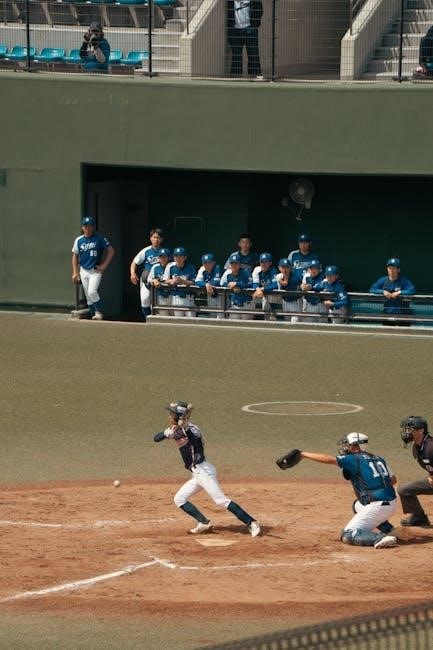
Outfielders must throw to the cutoff player, not directly to the infield, especially on balls hit to the gaps. This ensures a quicker, more accurate throw and prevents the ball from sailing out of play. Communication between the outfielder and cutoff player is vital, calling for the throw and confirming the target.
Drills should focus on simulating game-like situations, emphasizing quick decision-making, accurate throws, and seamless transitions between players. Mastering cutoff plays significantly improves defensive efficiency and limits the opponent’s scoring opportunities.
Defending the Squeeze Play: Timing & Execution
The squeeze play is a high-risk, high-reward offensive tactic demanding a sharp defensive response. Successfully defending it hinges on precise timing and flawless execution by multiple players, requiring extensive practice and clear understanding of responsibilities.
The pitcher plays a pivotal role, needing to vary their delivery – a change-up or hesitation pitch can disrupt the batter’s timing. The catcher must be prepared for a quick throw to third base, anticipating the runner’s attempt to score. Both must work in unison, anticipating the bunt.
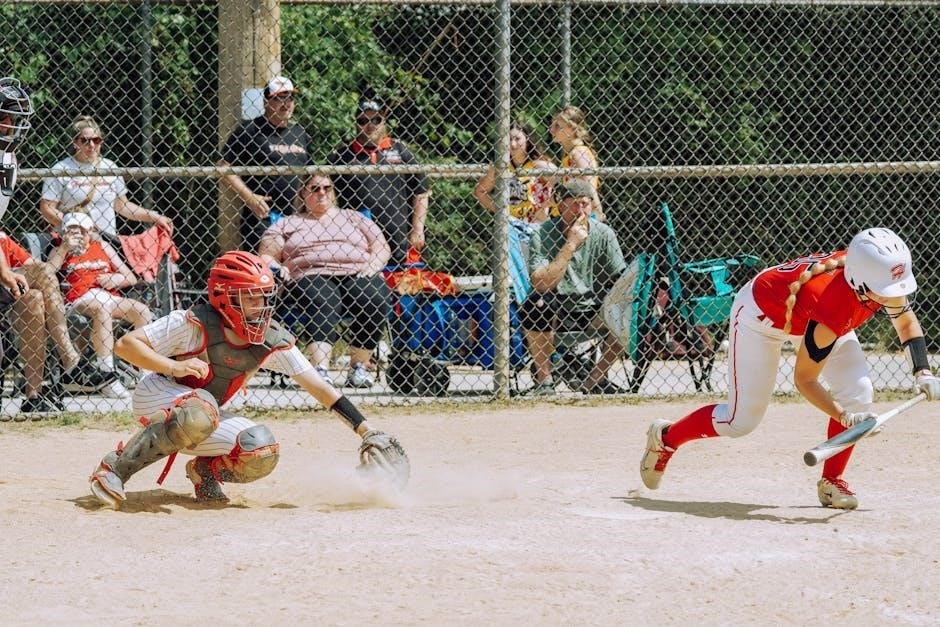
Infielders need to charge aggressively, anticipating the bunt and ready to field the ball cleanly. The third baseman is crucial, covering the plate and receiving the throw. First and second basemen must be ready to cover bases in case the bunt is popped up or missed.
Communication is paramount; a clear call from the pitcher or catcher alerts the infielders to the squeeze attempt. Drills should simulate squeeze play scenarios, focusing on quick reactions, accurate throws, and decisive plays at the plate. A successful defense neutralizes the offense and preserves the lead.
Late-Game Defensive Strategies: Protecting the Lead
Preserving a late-game lead in softball demands a shift in defensive focus – prioritizing preventing the tying or go-ahead run. This requires heightened awareness, strategic positioning, and unwavering composure under pressure. Every pitch and play becomes critical.
Pitch selection becomes paramount; focusing on inducing ground balls to generate double plays or easy outs. The infield must be positioned to maximize double play opportunities, while outfielders play deeper to prevent extra-base hits. Communication is vital, ensuring everyone is aware of the game situation.
Defensive substitutions can be strategic, bringing in players with strong fielding skills or those adept at making clutch plays. Pitchers need to maintain composure, avoiding walks and wild pitches that can extend innings. The catcher must effectively manage the game, calling pitches and calming the pitcher.
Anticipating the opponent’s strategies – stolen base attempts, hit-and-run plays – is crucial. Quick reactions, accurate throws, and decisive plays are essential to secure the victory. Mental toughness and unwavering focus are key to closing out the game.